
Imagine cruising through a quiet Victorian town at sunrise and spotting a big orange sweeper truck humming along the kerb. Road sweeping might seem like a mundane chore, but it’s actually a vital part of keeping our streets safe, clean and flood‑free.
In Victoria, major highways are handled by state agencies, but local councils manage roughly 150,000 km of smaller roads. That means towns like Ballarat, Bendigo or Horsham rely on regular sweeping to clear mud, leaves and debris. You may not always notice it, but a well-swept street can be the difference between a slick morning commute and a treacherous skid on wet leaves.
Let’s be real: nobody loves trash clogging gutters or dust coating their summer picnic. Road sweeping uses industrial sweepers – think giant street vacuums with rotating brooms – to pick up leaves, gravel and litter that litter kerbs and gutters. Local councils are actually required to do this.
In practice, sweeping focuses on the kerb and gutter where stormwater flows. When debris builds up, drains can block and flood the street; keeping them clear is literally a matter of safety. You’d be surprised how a few inches of leaves can clog a drain and turn a car park into a pond in minutes.
Road Sweeping Costs
It’s fair to wonder what such a service costs. Road sweepers are not cheap toys. New street‑sweeping vehicles can run from around $100,000 up to $500,000 depending on model and features. (Used older models might dip below $100k, but expect modern vacuum-regenerative combo sweepers toward the higher end.)
Beyond the sticker price, running a sweeper adds fuel and upkeep bills – roughly $50–$100 of fuel per day and a few thousand dollars a year for maintenance. No wonder many councils hire contractors to do the work.
If you’ve ever called a private sweeper, you might have seen billing by the hour or by the kilometre. For example, some councils charge about $320 for the first hour and $160 for each additional hour of road sweeping. These charges also often include disposal fees for the collected waste.
In regional areas, prices vary: remote trucks burn more fuel on long trips, while urban crews might squeeze in two streets before refilling. All up, a routine sweep of a neighbourhood might cost anywhere from a few hundred to a couple thousand dollars, depending on size.
| Item | Typical Cost (AUD) |
|---|---|
| New sweeper vehicle | $100,000 – $500,000 |
| Fuel per day | $50 – $100 |
| Contractor hourly rate (example) | $160 – $320 per hour |
| Annual maintenance (per vehicle) | Several thousand AUD |
It also helps to know that road sweepers aren’t lone wolves. After a storm or construction work, they often team up with other waste services. For example, crews will coordinate with liquid waste transport specialists to haul away muddy runoff or oily slurries left on the road. This ensures pollutants and extra debris don’t end up in drains or the bay.
In short: the cost of sweeping is tied to equipment (the sweeper truck), the crew, and sometimes extra hauling. But for communities, it’s often budgeted as part of road maintenance — because every dollar spent now can save far more in flood damage and repaving later.
The Road Sweeping Process
When a street sweeper arrives, it’s like watching a small parade of efficiency. First, the machine usually sprays water to dampen dust (so fine dust doesn’t billow up into your face as you watch). Then large rotating brushes along the front and sides sweep grit, leaves and trash towards a powerful vacuum mouth.
The debris is sucked up into an onboard hopper (like the sweeper’s belly) while blower fans keep dust down. Some sweepers even recycle the water in a closed loop to minimize waste – tech that feels almost jet-set cool compared to old broom and shovel methods.
Experienced operators know how to get into tight spots. In fact, aside from big machines, smaller ride-on or trailer-mounted sweepers are used in narrow lanes and parking lots. Common sweeper types include mechanical broom sweepers (for heavy debris), vacuum/suction sweepers (great for fine dust) and regenerative air sweepers (which use blasts of air to loosen dirt).
Top-of-the-line models are combinations of these, handling any mess from leaves to sand. Picking the right sweeper often depends on where you are: dry western plains might favor vacuum sweepers to tackle fine dust, while leafy Melbourne suburbs might use broom sweepers to knock leaves into the path of the vacuum.
Sweeping crews follow a plan. In summer and autumn, fallen gum leaves and acorns can pile up overnight, so councils crank up the sweepers on weekend mornings. After big storms, special crews hit the roads ASAP. You’ve probably seen them working in the wee hours, when traffic is light.
By contrast, during quieter months the schedule relaxes. In any case, operators often partner with on‑the-spot workers who do manual picking in gutters and footpaths, finishing the job in tricky corners that even the best robot can’t reach.
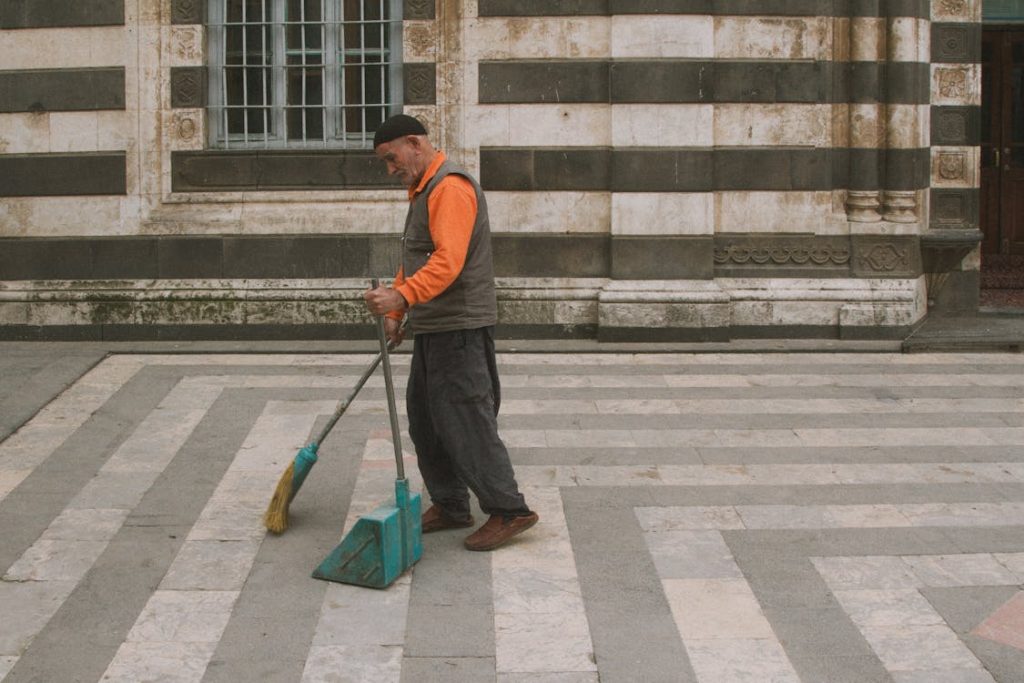
The whole show is surprisingly choreographed. A single street might see sweepers pass twice in opposite directions – first one side, then the other – ensuring gutters are clean. For more complex sites like shopping precincts, sweeping can happen daily, with litter pickers tagging along to empty bins.
In fact, some councils keep residential streets on a 28-day cycle and hit commercial strips every day. In regional Victoria, some suburbs are swept every month or two, while city busier zones see weekly cleaning. It’s all detailed in each council’s schedule, designed to balance clean streets against council budgets.
Road Sweeping Schedule
Who decides when to sweep? Primarily, local councils set the schedule for non-arterial roads. Some councils’ road management plans recommend sweeping local streets every seven weeks, though in practice they often sweep about every 4–5 weeks during most of the year, and even more often in summer or after heavy storms.
Leaf litter and dust don’t wait for an office memo, so flexibility is key. Some councils publish timetables (yes, you can check an app to see if your street is next on the list), while others respond to reports.
Major highways and arterial roads are swept by state agencies or private contractors under state transport departments. But remember: many kilometres of Victoria’s roads are the council’s responsibility. In practice, if you live on a quiet cul‑de‑sac, sweeping might only happen a few times a year unless a special event or storm triggers extra work.
Residents are often encouraged to clear adjacent leaves and trash (e.g. using green waste bins for leaf litter) so that sweepers can do their job faster. After all, blowing piles of leaves out onto the road will only force the sweeper to haul it back in – and who likes unnecessary traffic delays?
Key Benefits of Road Sweeping
Street sweeping isn’t vanity – it’s practical and even lifesaving. Here are the main wins:
- Prevents flooding: A neat street seems plain, but it keeps gutters clear. Removing leaves and debris stops drains from backing up. When trash builds up in kerbs, even a modest rain can flood roads. Sweeping is essentially front-line stormwater management.
- Improves safety: Loose gravel, broken glass or wet leaves on roads and sidewalks are slipping hazards. Cleaning these away reduces the chance of crashes or falls. Sweeping eliminates slippery algae or rubbish that could trip cyclists and pedestrians.
- Protects public health: Piles of organic waste are breeding grounds for pests and mould. By whisking away leaves and rubbish, sweepers help curb mosquito and rodent problems. Less dust blowing around means better air quality for everyone, especially in dry, windy rural areas.
- Keeps environments clean: Debris on roads often washes into creeks and bays. Street sweeping prevents litter from polluting waterways. Cleaner streets mean cleaner rivers and beaches downstream – a big deal in eco-minded Victoria.
- Extends road life and appearance: Grit and sand are surprisingly abrasive. Left on asphalt, they grind tires and road surfaces, speeding up pavement wear. Sweeping that grit away helps extend pavement life (saving councils repair costs later). Plus, a swept street simply looks better – giving our towns a polished, cared-for vibe.
Beyond these bullet points, there’s a simple catch: unclean streets create a negative impression on citizens. In other words, tidy streets reflect community pride. Whether you measure it in flood dollars saved or how happy the locals are, clean roads are a win for everyone.
Conclusion and Next Steps
At the end of the day, road sweeping might not grab headlines, but it keeps our western Victorian communities humming smoothly. We’ve seen that sweepers come in all shapes — from big truck-mounted machines to small ride-ons — and schedules adjust to seasonal needs. The costs can add up, but so can the costs of ignoring road grime: think flooding, accidents and expensive repairs.
Local councils and maintenance teams take this seriously. For instance, Victoria’s Department of Transport and Planning explicitly lists cleaning gutters and removing litter as routine maintenance tasks.
Ultimately, if you’re a homeowner or business owner in Western Victoria, remember that you have a role too. Avoid piling yard waste onto the street, and report any missed sweeping or blocked drains to your local council. If you’re interested in estimates for large-scale sweeps (say after a storm or development work), consider contacting professional sweeping contractors who can handle the job.
Ready to keep your streets clean? Whether you’re a business manager or a curious resident, reach out to your local council or service provider and ask about road sweeping plans. Give them a shout and say, “Hey, my street could use some love.” You’ll be surprised how smooth (and pleasant) your commute feels after that. After all, a cleaner road isn’t just pretty—it’s safer and smarter for everyone.
Frequently Asked Questions
What exactly is road sweeping and why is it done?
Road sweeping (or street sweeping) is the regular cleaning of kerbs, gutters and roadway surfaces using specialized vehicles. It’s done to remove debris like leaves, sand, litter and broken glass from roads and gutters. This protects storm drains from clogging (reducing flood risk), enhances safety by eliminating hazards, and even improves air and water quality. Essentially, it keeps our streets clean and infrastructure working properly.
How often is road sweeping needed in Western Victoria?
Road sweeping in Western Victoria is usually done weekly or fortnightly, depending on the area, traffic levels, and local council requirements.
What does the road sweeping process include for Western Victoria roads?
Road sweeping in Western Victoria typically includes debris removal, gutter cleaning, dust control, and safe disposal of collected waste.
How much does road sweeping cost in Western Victoria?
Road sweeping in Western Victoria generally costs between $80 to $150 per hour, depending on road size, debris level, and the type of sweeping equipment required.